STATE COLLEGE — There is a certain kind of optimism that lives on a farm in spring.
It exists in greenhouse rows packed tightly with flowers waiting for warmer days. It lives in the first sweet corn seeds disappearing beneath freshly turned soil. It exists in orchards where fruit trees planted years ago are only now beginning to reward the patience that created them.
At Harner Farm, that optimism has been growing for generations.
“My grandfather, he graduated Penn State in horticulture in 1939,” said Chris Harner. “He farmed down the road here on Route 45 for a couple years, then bought our current place in 1945.”
What started as a 72-acre farm primarily focused on apples has evolved over decades into a place where tree fruit, vegetables, flowers, pumpkins and generations of family history all grow side-by-side.
Today, Harner Farm produces everything from apples and peaches to pumpkins, gourds and roughly 10 to 12 acres of sweet corn. While orchard crops require years of patience, Harner explained vegetables bring a different challenge entirely.
“The tree fruit takes years to develop,” Harner said. “By the time you plant a tree, it’s probably a good five, six years till you really start getting a crop.”
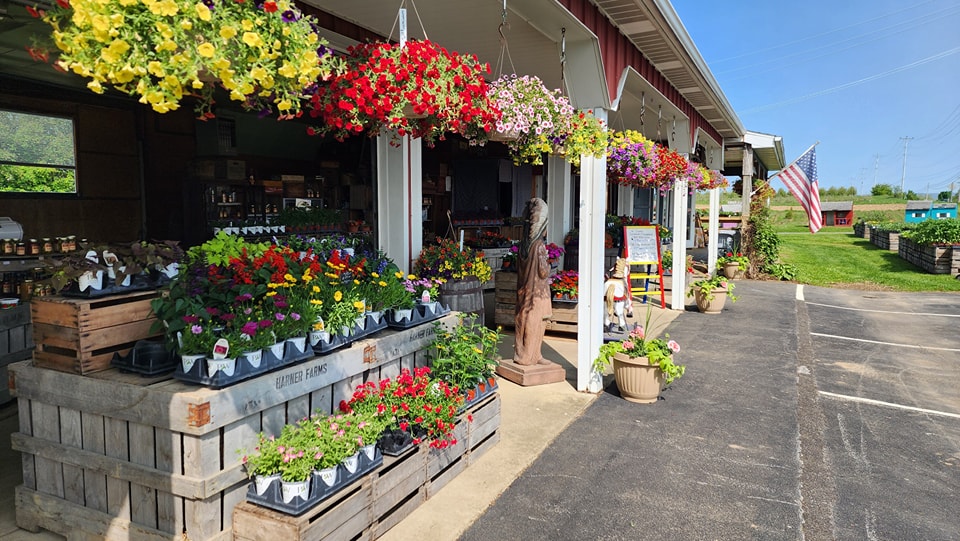
Right now, however, greenhouse season is center stage.
The farm recently opened its greenhouses after weeks spent growing flowers, hanging baskets and starter plants that will eventually find homes in gardens across Centre County. Harner described the process with the kind of pride that only comes from building something slowly.
“You start with a seed or a little plant and create something beautiful,” Harner said. “Something that lasts all season long, something to take your mind off daily life and you look at it and see the beauty in it.”
For Harner, the idea of “farm to table” is not about buzzwords or labels.
While he quickly clarified that Harner Farm is not organic, he emphasized something he believes matters even more: freshness. The farm uses integrated pest management practices and works to minimize chemical use whenever possible, both for cost and practicality. But ultimately, he said, fresh food simply tastes better.
“Oftentimes our stuff’s picked the same day that it’s sold,” Harner said. “It’s at its peak ripeness and always tastes better.”
He used peaches as an example.
Instead of being picked hard and shipped long distances before ripening weeks later, Harner said locally grown fruit picked at the right moment develops flavors that simply cannot be replicated.
Behind that freshness, however, is work many customers never see.
Planning for one growing season often begins while the current one is still unfolding. Orchard decisions happen years ahead. Weather changes everything. Labor shortages create new challenges. Every day often becomes an exercise in deciding which problem needs solved first.
“You’re always kind of thinking about it,” Harner said. “It’s usually a good nine months to a year ahead you start planning for your next season.”
For nearly five decades, one place where customers have connected directly with Harner Farm has been the downtown farmers market.
Harner’s father helped establish the market in the mid-1970s, and today Harner Farm remains one of only two original farms still participating.
For Harner, that direct connection may be the most rewarding part of farming.
“It’s one on one with a customer,” Harner said. “They’re often neighbors or live in the area. You just get to know people and talk to them. That’s the best part of it.”
The work itself can be difficult. Harner admitted that freely.
But difficult and rewarding often coexist in farming.
“You start with the seed and you grow it and you get food out of it,” Harner said. “You can help other people get food and they eat it and enjoy it. It’s a very rewarding business lifestyle.”
And perhaps that is what farm to table really means.
Not simply food traveling shorter distances.
But neighbors growing food for neighbors, one season at a time.